Benefiber Review 2026 - Does This Taste-Free Fiber Work? is presented for general information by MexicanPharm24. This is not medical advice and we do not sell or ship medications. Read the label and consult a licensed healthcare professional before use.
 Taste-Free
Benefiber Review: Does This Taste-Free Prebiotic Fiber Work?
1330 reviews
An honest Benefiber review: the wheat-dextrin prebiotic fiber, the gluten-free vs wheat-allergy nuance, how much fiber you really get, and Benefiber vs Metamucil.
Reviewed July 1, 2026
Is Benefiber worth it? My honest review at a glance
Benefiber is the taste-free fiber powder you stir into coffee, water or yogurt and never notice — a daily prebiotic that supports regularity and feeds your gut bacteria. It's cheap, trusted, and genuinely grit-free, which is exactly why so many people prefer it to Metamucil. But there are two honest things to understand before you buy: how much fiber you actually get per scoop, and a wheat caveat that trips people up. Let's dig in.
I went through the formula, the gluten/wheat nuance, the real fiber dose, the price, and the feedback. Here's my honest take.
Benefiber is a single-ingredient wheat-dextrin prebiotic soluble fiber — a clear, taste-free powder for regularity and gut-bacteria support, at a very low cost per serving, from a trusted mainstream brand (Haleon). The honest catches: it's only ~3g fiber per 2-tsp scoop (less per dose than psyllium, so you may need 2–3 doses/day), it's made from wheat (gluten-free, but not for a wheat allergy), and you should start low to avoid early gas. Convenient and effective for regularity — just not a high-dose fiber.
The essentials of my Benefiber review
My rating: 7.5/10 — a genuinely taste-free, low-cost prebiotic fiber that's easy to stick with, with a modest per-dose fiber amount.
Key spec: 3g soluble wheat-dextrin fiber per 2-tsp serving, dissolves clear.
| Detail | Benefiber |
|---|---|
| Brand | Benefiber (Haleon, formerly GSK Consumer Health) |
| Format | Clear, taste-free powder; mixes into drinks/food |
| Fiber | Wheat dextrin, ~3g soluble fiber per 2 tsp (0g sugar) |
| Dose | 2 tsp up to 3× daily; 125-serving tub |
| Price | ~$13–14 (17.6oz tub, ~$0.11–0.20/serving) |
| Note | Gluten-free & non-GMO, but wheat-derived (not for wheat allergy) |
✅ What I liked
- ✅ Genuinely taste-free and grit-free — dissolves clear in coffee, water or food (its standout quality).
- ✅ A true prebiotic that supports regularity and feeds gut bacteria; sugar-free, single-ingredient, fully disclosed.
- ✅ Very low cost per serving and FSA/HSA-eligible.
- ✅ From a trusted, pharmacist-recommended mainstream brand.
❌ What held it back
- ❌ Only ~3g fiber per 2-tsp scoop — lower per dose than psyllium, so you may need multiple servings.
- ❌ Made from wheat — gluten-free, but not safe for a wheat allergy.
- ❌ Can cause gas or bloating if you ramp up too fast (fermentable fiber).
💡 One of the cheapest daily fibers per serving — and it's FSA/HSA-eligible.
In this Benefiber review:
- What it is and what's inside
- Is it gluten-free and safe with a wheat allergy?
- How much fiber do you really get?
- Does it actually work?
- Who makes it
- Is it worth the price?
- Benefiber vs Metamucil and Citrucel
- Side effects and safety
- What customers say
- My verdict
- FAQ
What is Benefiber and what's inside it?
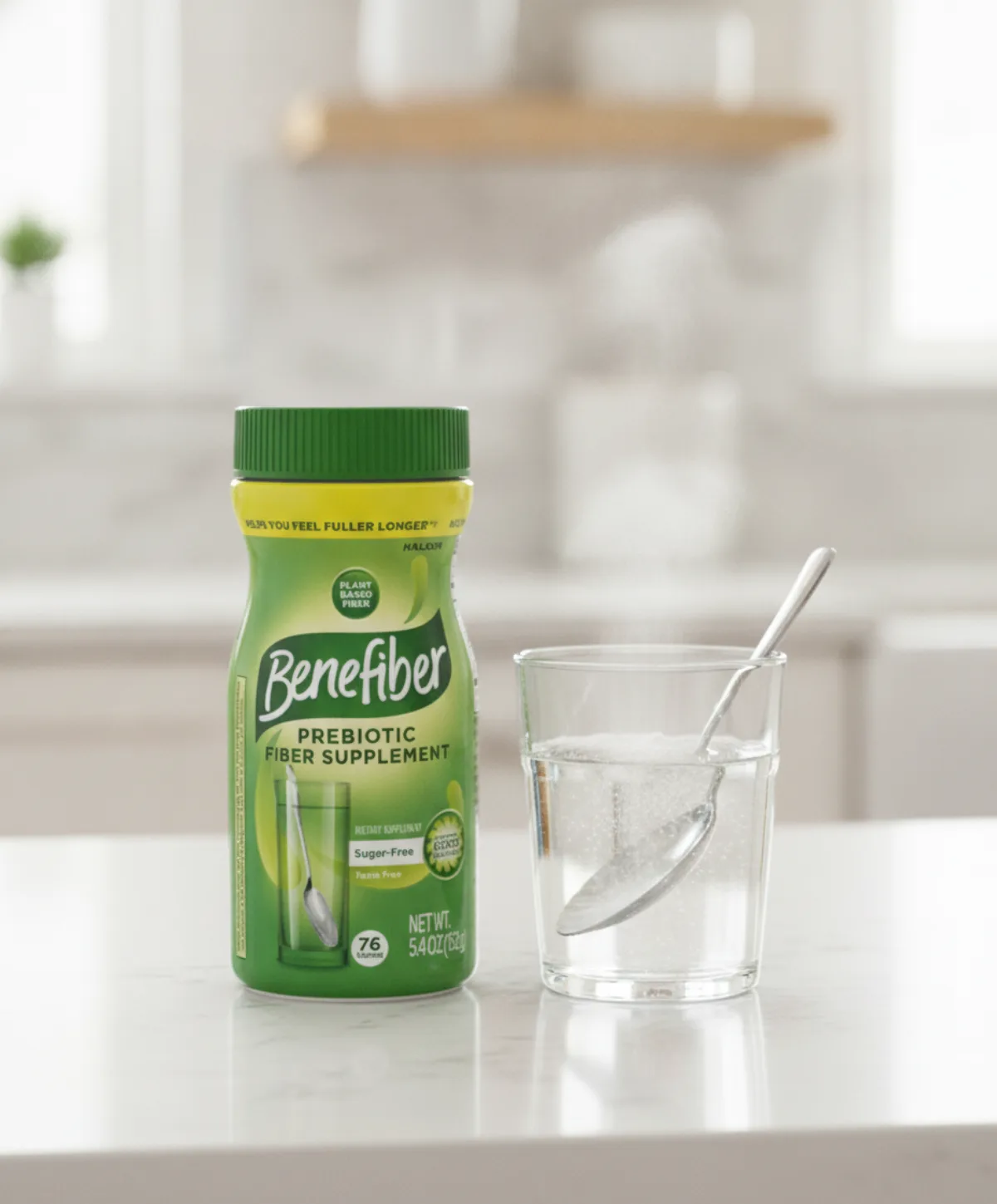
Benefiber is refreshingly simple: it's a single-ingredient prebiotic soluble fiber made from wheat dextrin, and nothing else. Per label serving:
- 🌾 ~3g of soluble fiber per 2 teaspoons (all from wheat dextrin), with 0g sugar and about 15 calories.
- 🥤 It's a fine white powder that's clear and taste-free — it dissolves completely into hot or cold non-carbonated drinks or soft food without changing the taste or texture.
- Label directions: 2 teaspoons up to 3 times a day for adults.
💡 As a prebiotic, wheat dextrin is fermented by your gut bacteria (feeding them) and adds soluble fiber for regularity. There's no proprietary blend, no sugar, and no flavor to mask — the whole selling point is that you barely notice it's there.
Is Benefiber gluten-free, and is it safe with a wheat allergy?
This is the most-searched Benefiber question, and the answer has two parts. Yes, Benefiber is gluten-free — even though it's made from wheat, the wheat dextrin is processed to meet the FDA gluten-free standard (under 20 ppm), so it's fine for celiac disease or gluten sensitivity per the label.
🚨 But it is NOT safe if you have a wheat allergy. Gluten-free processing removes gluten, not the wheat-allergen risk — and Benefiber is wheat-derived. So a wheat allergy is a hard no; choose a non-wheat fiber (like psyllium-based Metamucil or methylcellulose Citrucel) instead. This distinction — gluten-free yes, wheat-allergy-safe no — is the single most important thing to get right about Benefiber.
How much fiber does Benefiber actually give you?
Here's a point of genuine confusion worth clearing up. The classic label defines a serving as 2 teaspoons = 3g fiber. Newer "GLP-1 friendly" packaging headlines "6g of fiber per serving" — but that's the same powder, simply counting a 4-teaspoon serving. Either way, it's roughly 1.5g of fiber per teaspoon.
⚠️ Honest takeaway: that's a modest per-dose amount — lower fiber-per-teaspoon than psyllium (Metamucil). To reach a meaningful daily fiber intake, you'll likely take 2–3 servings a day, which the label supports. It works, but don't assume one scoop is a big fiber hit; it's a "little and often" fiber, not a high-dose one.
Does Benefiber actually work?
For its two main jobs — regularity and prebiotic gut support — yes, and users broadly agree.
How to use Benefiber (and a realistic timeline)
- Start low (e.g. one serving a day) and increase slowly over a week or two, with plenty of water.
- Regularity improvements usually show within a few days to a couple of weeks of consistent use.
- The prebiotic (gut-bacteria) benefit builds gradually with daily use.
➡️ The honest read: Benefiber reliably helps regularity and adds daily soluble fiber, and its taste-free format makes it easy to actually stick with (a real advantage, since the best fiber is the one you'll take daily). The main caveat is the early gas/bloating that fermentable fiber can cause if you ramp up too fast — go slow and it usually settles.
Who makes Benefiber?
Benefiber is a long-standing mainstream OTC brand, formerly part of GSK Consumer Healthcare and now owned by Haleon (the consumer-health company spun off from GSK in 2022). It's stocked in every major US pharmacy, frequently pharmacist-recommended, and sits alongside Metamucil and Citrucel as a household fiber name.
➡️ So there's no legitimacy concern here — it's a trusted, well-established name-brand supplement, not a fly-by-night product. That reliability is part of the appeal.
Is Benefiber worth the price?
Value is a real strength. The 17.6oz / 125-serving tub runs about $13–14 (a bit more on Amazon), which works out to roughly $0.11–$0.20 per 2-tsp serving — one of the cheaper daily fibers per dose. It's also FSA/HSA-eligible, and Subscribe & Save can trim a little more.
💰 My take on the value: excellent for a trusted, taste-free prebiotic fiber. The one nuance is that because a "dose" is small (~3g), you may use 2–3 servings a day, so a tub doesn't last as long as the "125 servings" implies if you're aiming for higher fiber intake. Even so, per gram of fiber it's very reasonable, and cheaper and far more palatable than many alternatives.
Benefiber vs Metamucil and Citrucel — how do they compare?
Here's how Benefiber stacks up against the two fiber supplements US shoppers most often compare it to (plus a note on MiraLAX, which isn't fiber at all).
| Product | Fiber type | Price | Strength | Weakness |
|---|---|---|---|---|
| Benefiber | Wheat dextrin (soluble, prebiotic) | ~$13–14 / 125 svg | Truly taste-free & grit-free, mixes into anything | Low fiber/dose; wheat-derived; can cause gas |
| Metamucil 4-in-1 | Psyllium husk (gel-forming) | ~$35 / 180 tsp | Stronger stool bulking + LDL-cholesterol support claim | Gritty, thickens fast, flavored, pricier |
| Citrucel | Methylcellulose (non-fermentable) | ~$18–25 | Least gas/bloating of the group | Flavored/sweetened; fewer prebiotic benefits |
| MiraLAX (not fiber) | PEG 3350 (osmotic laxative) | ~$25–31 / 30 doses | Gentle short-term constipation relief | Not a fiber/prebiotic; occasional use only |
So which should you choose? For a taste-free daily prebiotic you'll actually stick with, Benefiber wins. If you specifically want cholesterol support and stronger bulking, gel-forming Metamucil (psyllium); if you're very prone to gas, non-fermentable Citrucel; and for occasional constipation (not daily fiber), MiraLAX is a laxative, not a fiber. Benefiber's edge is palatability and prebiotic benefit, not fiber-per-dose.
Are there side effects to Benefiber?
The most common issue is gas, bloating or mild cramping when you start — typical of fermentable fiber if you ramp up too fast. Starting with a small dose and increasing gradually (with plenty of water) usually prevents it.
⚠️ Take care or check with a doctor before taking Benefiber if you:
- Have a wheat allergy — it's wheat-derived; avoid it and choose a non-wheat fiber.
- Take medications — separate them from fiber by a couple of hours, as fiber can affect absorption.
- Have a swallowing difficulty or narrowing of the gut, or persistent constipation/abdominal pain (get it evaluated).
- Are adding it for a child (follow the age-specific dosing) or are pregnant — confirm with your provider.
Supplements aren't a substitute for medical care. Always take fiber with enough fluid.
What do real customers say about Benefiber?
Benefiber is very well reviewed (around 4.5/5 across the brand site and retailers):
👍 The positives: overwhelmingly, that it's truly taste-free and dissolves clear with no grit or clumps (even in cold water) — the standout praise — plus effectiveness for regularity, gentleness, and good value.
👎 The negatives: gas or bloating when starting too fast; a few people detect a faint taste; some feel the ~3g per scoop is low and want multiple doses; and occasional grumbles about price increases or shrinking tub sizes.
So, should you buy Benefiber?
Is Benefiber worth it? My verdict is yes for most people — 7.5/10.
To my mind, Benefiber nails the thing that matters most for a daily fiber: you'll actually take it. It's genuinely taste-free and grit-free, mixes invisibly into your routine, supports regularity and feeds your gut bacteria as a prebiotic, costs little per serving, and comes from a trusted brand.
What keeps it from a top score is honest: it delivers only ~3g fiber per scoop (so you may need multiple daily doses), it's made from wheat (fine for gluten-free diets, but not for a wheat allergy), and it can cause early gas if you rush the ramp-up.
- 👍 Buy Benefiber if you want an easy, taste-free daily prebiotic fiber for regularity and gut support and you don't have a wheat allergy.
- 👎 Choose a rival if you have a wheat allergy, want stronger bulking or cholesterol support (Metamucil/psyllium), or are very gas-prone (Citrucel).
➡️ Bottom line: the most painless daily fiber to stick with — taste-free, cheap and effective for regularity — as long as you're fine with a modest per-dose amount and aren't allergic to wheat.
Start with one serving a day and build up slowly, with plenty of water.
Benefiber FAQ
Is Benefiber gluten-free?
Yes. Although it's made from wheat, the wheat dextrin is processed to meet the FDA gluten-free standard (under 20 ppm), so it's fine for celiac disease or gluten sensitivity per the label. However, it is not safe for a wheat allergy.
Can I take Benefiber if I have a wheat allergy?
No. Benefiber is wheat-derived, and gluten-free processing removes gluten but not the wheat-allergen risk. If you have a wheat allergy, avoid it and choose a non-wheat fiber like psyllium (Metamucil) or methylcellulose (Citrucel).
How much fiber is in Benefiber?
About 3g of soluble fiber per 2-teaspoon serving (roughly 1.5g per teaspoon). Newer packaging headlines "6g per serving," but that just counts a 4-teaspoon serving of the same powder. The label supports up to 3 servings a day for adults.
Does Benefiber work for constipation and regularity?
Yes, for many people — it adds daily soluble fiber that supports regularity, and acts as a prebiotic feeding gut bacteria. Improvements usually show within a few days to a couple of weeks. Start low and increase slowly with water to avoid gas.
Benefiber vs Metamucil — which is better?
Benefiber (wheat dextrin) is taste-free and grit-free, ideal for daily prebiotic use and easy mixing. Metamucil (psyllium) is gel-forming with stronger stool bulking and a cholesterol-support claim, but it's gritty, flavored and pricier. Choose Benefiber for palatability, Metamucil for bulking/cholesterol.
How much does Benefiber cost?
About $13–14 for the 17.6oz / 125-serving tub (a bit more on Amazon), roughly $0.11–$0.20 per 2-tsp serving. It's FSA/HSA-eligible, and Subscribe & Save can lower it further. It's one of the cheaper daily fibers per dose.
Does Benefiber cause gas or bloating?
It can when you start, because wheat dextrin is a fermentable fiber. Beginning with a small dose and increasing gradually over a week or two, with plenty of water, usually prevents or minimizes it.
Keep reading before you buy Benefiber
A little homework helps you use a daily fiber well:
- How to read a supplement and medication label — so fiber grams and allergen notes are clear.
- How to buy medications and supplements online safely — a checklist for buying from trustworthy sellers.
Disclaimer: This Benefiber review is independent editorial information, not medical advice. Benefiber is made from wheat and, while gluten-free, is not safe for people with a wheat allergy. Dietary supplements are not intended to diagnose, treat, cure or prevent any disease, and individual results vary. Always take fiber with adequate fluid, and talk to a licensed healthcare professional before starting if you have a digestive condition, take medication, are pregnant, or are giving it to a child. This page may contain affiliate links; we may earn a commission at no extra cost to you, which never changes our honest assessment. Pricing was accurate at the time of writing (July 2026) and may change — verify on the official site.