BelliWelli Fibermaxxing Bundle Review 2026 - Worth $115? is presented for general information by MexicanPharm24. This is not medical advice and we do not sell or ship medications. Read the label and consult a licensed healthcare professional before use.
 Fibermaxxing-9%
BelliWelli Fibermaxxing Bundle Review: Is the Trend Worth $115?
334 reviews
An honest BelliWelli Fibermaxxing Starter Bundle review: how much fiber it really gives you, the cost per gram vs psyllium and chia, whether fibermaxxing works, and if the $115 bundle is worth it.
Reviewed July 2, 2026
Is the BelliWelli Fibermaxxing Bundle worth it? My honest review at a glance
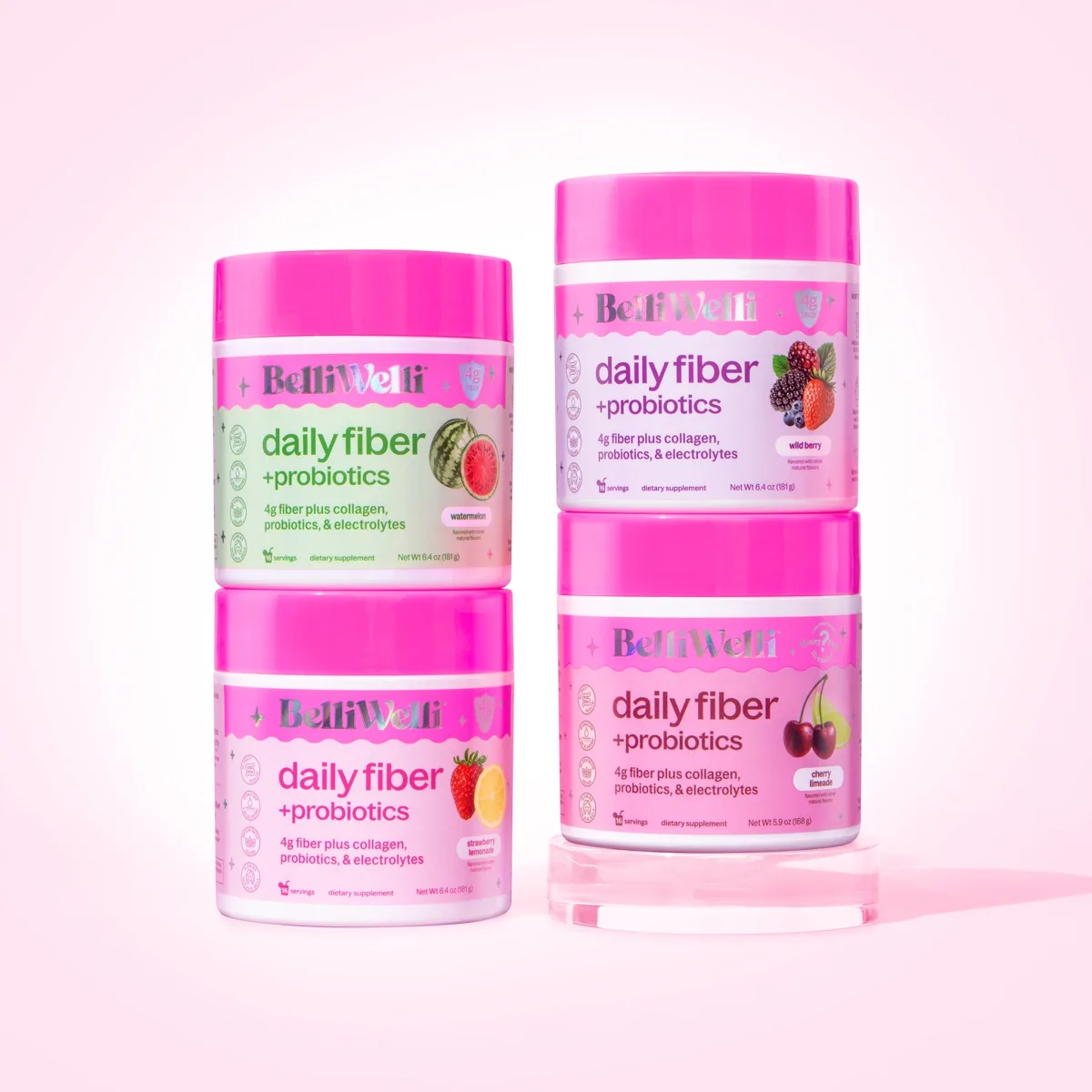
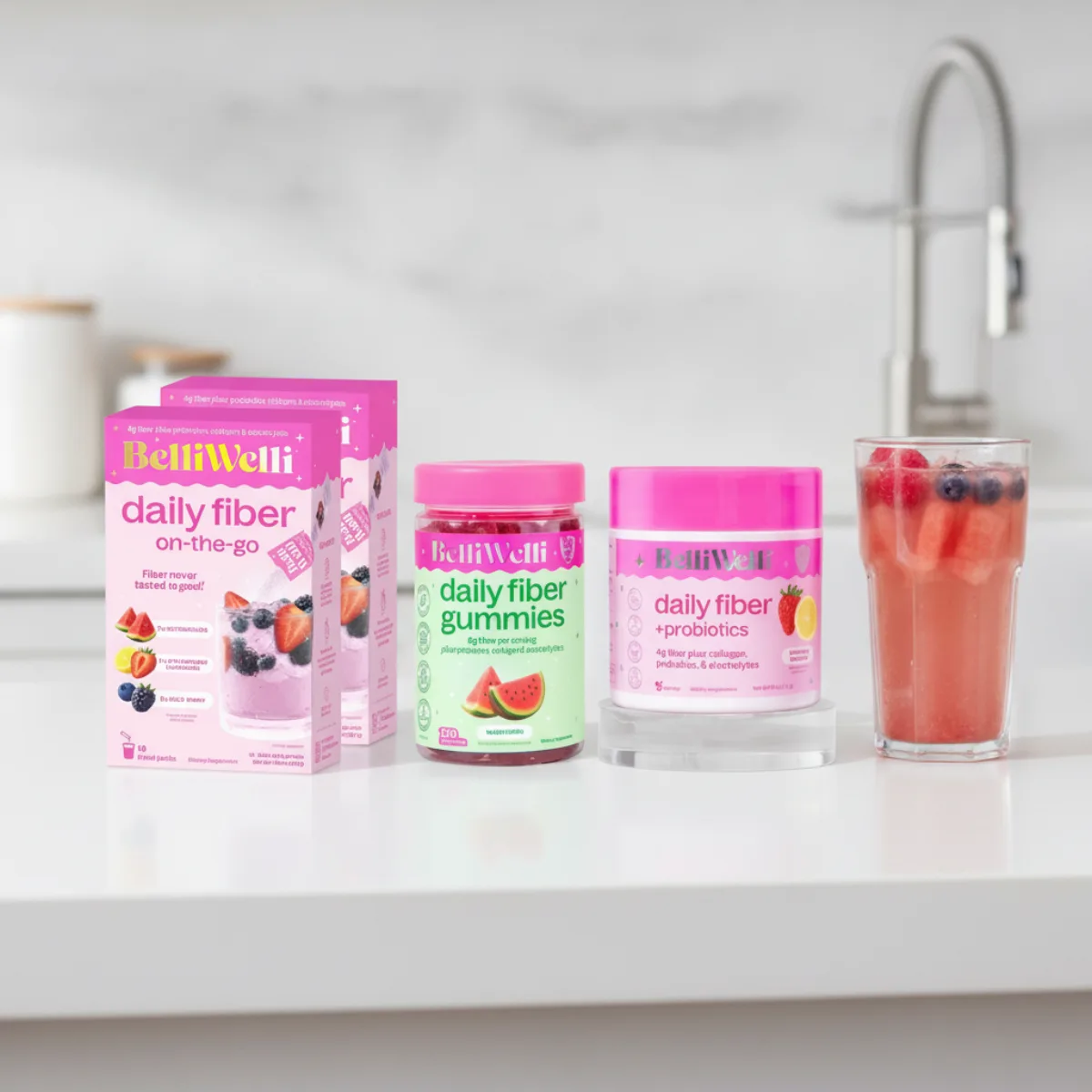
The BelliWelli Fibermaxxing Starter Bundle is the brand's play on 2026's biggest nutrition trend: "fibermaxxing." For $114.99 you get three fiber products in one kit — 20 stick packs, a jar of fiber gummies, and a daily fiber tub (80 servings total) — all using gentle acacia and tapioca fiber plus a probiotic, collagen and electrolytes. It's genuinely pleasant, low-bloat, and made by a legit gut-health brand. But two honest truths shape whether it's worth it: each serving only delivers 4–5 grams of fiber (so this is a top-up, not a "maxxing" engine), and it costs 6–10× more per gram of fiber than psyllium, chia or beans. Let's separate the trend from the value.
I went through what's actually in the bundle, the real fiber math, the cost per gram versus cheaper options, the GLP-1 angle, and how it differs from BelliWelli's other bundle. Here's my straight take.
A well-made, tasty, gentle fiber kit (3 formats, 80 servings, acacia/tapioca fiber — no bloat-y inulin) from a real, dietitian-friendly brand. The upside: low-FODMAP fiber that's easy on the stomach, fun formats, and a genuine convenience/GLP-1-companion niche. The honest catches: each serving is only 4–5 g of fiber (the whole $115 bundle averages ~6 g/day — you'll still need food to hit 25–38 g), the probiotic (1 billion CFU) and collagen (100 mg in the gummies) are token doses, and at ~$0.30 per gram of fiber it's 6–10× pricier than psyllium or chia. Lovely product; poor value if your only goal is more fiber.
The essentials of my BelliWelli Fibermaxxing Bundle review
My rating: 6/10 — a genuinely nice, gentle, well-branded fiber kit that's badly out-valued per gram by whole foods and psyllium, and oversold by the "fibermaxxing" framing.
Key spec: 3 fiber formats, 80 servings, 4–5 g gentle acacia/tapioca fiber per serving + probiotic, collagen, electrolytes.
| Detail | BelliWelli Fibermaxxing Bundle |
|---|---|
| Brand | BelliWelli (gut-health brand, founded by Katie Wilson; sold at Target) |
| What's in it | 20 stick packs + 120-ct gummies jar + 1 daily fiber tub = 80 servings (~60 days) |
| Fiber per serving | Sticks & tub: 4 g (acacia fiber) · Gummies: 5 g (tapioca fiber) — no inulin |
| Also contains | 1 billion CFU probiotic (B. coagulans), collagen (100 mg gummies / 2 g powder), electrolytes, 2 g added sugar |
| Cost per gram of fiber | ~$0.30–0.33 (vs ~$0.04 for psyllium/chia) |
| Price | $114.99 one-time ($125.96 reg) / ~$103.49 subscription |
✅ What I liked about the BelliWelli Fibermaxxing Bundle
- ✅ Gentle, low-bloat fiber — acacia and tapioca fiber with no inulin, so it's easier on sensitive/IBS stomachs than many fiber supplements.
- ✅ Three fun, genuinely tasty formats (sticks, gummies, powder) that make it easy to actually take fiber daily — the main reason people succeed with it.
- ✅ From a real, established gut-health brand (BelliWelli, sold nationwide at Target), not a dropshipper.
- ✅ Low added sugar (2 g, stevia-sweetened) and a low-FODMAP-friendly design.
- ✅ A reasonable GLP-1 companion for medication-related constipation, if you want it in a nice format.
❌ What held the BelliWelli Fibermaxxing Bundle back
- ❌ Only 4–5 g of fiber per serving — a top-up, not the "maxxing" the name implies; you still need food to hit 25–38 g/day.
- ❌ Very expensive per gram of fiber — ~$0.30/g vs ~$0.04 for psyllium, chia or beans.
- ❌ Token extras — 1 billion CFU (single strain) and 100 mg collagen in the gummies are near-symbolic doses.
- ❌ The "fibermaxxing" framing oversells a convenient fiber top-up as a trend engine.
💡 Ramp fiber up slowly with water — and know you can fibermaxx far cheaper with whole foods.
In this BelliWelli Fibermaxxing Bundle review:
- What is fibermaxxing, and does the trend actually work?
- What's actually inside the BelliWelli Fibermaxxing Bundle?
- How much fiber does the BelliWelli Fibermaxxing Bundle really give you?
- Is the BelliWelli Fibermaxxing Bundle good value?
- Does the BelliWelli Fibermaxxing Bundle help with bloating and regularity?
- Is the BelliWelli Fibermaxxing Bundle good for GLP-1 users?
- How does the BelliWelli Fibermaxxing Bundle compare to Supergut and psyllium?
- BelliWelli Fibermaxxing Bundle vs the Core Four Bundle — which should you buy?
- Who makes BelliWelli, and is the Fibermaxxing Bundle legit?
- Are there downsides to the BelliWelli Fibermaxxing Bundle?
- My verdict on the BelliWelli Fibermaxxing Bundle
- BelliWelli Fibermaxxing Bundle FAQ
What is fibermaxxing, and does the trend actually work?
"Fibermaxxing" is the 2026 TikTok trend of deliberately maximizing your daily fiber intake — the whole reason this BelliWelli bundle exists. So does it work? The honest, nuanced answer: the direction is right, the extreme is not.
- ✅ The core is legit. Only about 5% of Americans hit the recommended fiber intake — the average is ~15 g/day against a target of 25–38 g (roughly 28 g for women, 34 g for men). Most people genuinely should eat more fiber, and doing so helps regularity, blood sugar, cholesterol, satiety and the gut microbiome.
- ⚠️ "More is always better" is false. There's no proven benefit to mega-dosing 50–90 g/day, and ramping up too fast causes gas, bloating and even constipation. Experts are clear: hitting the recommended amount is the goal, not piling on.
➡️ What this means for the bundle: fibermaxxing (in the sensible sense) is worth doing — but it's fundamentally about getting to 25–38 g/day, gradually, mostly from food. A branded bundle can help you close part of the gap conveniently; it isn't required, and it isn't magic. Keep that frame as we look at what BelliWelli actually delivers.
What's actually inside the BelliWelli Fibermaxxing Bundle?
The bundle is three separate BelliWelli fiber products in one kit (80 servings, marketed as ~60 days):
- 🥤 20 daily fiber stick packs — single-serve drink mix, 4 g fiber from organic acacia fiber, plus probiotic, collagen and electrolytes. (The solo version is the BelliWelli fiber powder.)
- 🍬 1 jar of fiber gummies (120 count / 30 servings) — 5 g fiber from soluble tapioca fiber, plus 100 mg collagen, probiotic and electrolytes. (Solo: the 4-in-1 fiber gummies.)
- 🥄 1 daily fiber tub (30 servings) — 4 g acacia fiber plus 2 g collagen, probiotic and electrolytes.
💡 The genuinely smart choice here is the fiber type: BelliWelli uses acacia (gum arabic) and tapioca fiber, and deliberately no inulin. Inulin is the ingredient that makes many fiber and greens products so gassy — leaving it out makes BelliWelli notably gentler and more low-FODMAP-friendly. That's a real, honest advantage.
⚠️ The extras, though, are mostly for the label: the probiotic is 1 billion CFU of a single strain (a minimal dose), and the collagen is just 100 mg in the gummies (nutritionally negligible; the powder's 2 g is more real). Don't buy this for the probiotic, collagen or electrolytes — the fiber is the actual product.
How much fiber does the BelliWelli Fibermaxxing Bundle really give you?
This is the number the "fibermaxxing" name hopes you won't do, so let's do it.
Each serving is only 4–5 g of fiber — about one-sixth of a 25–30 g daily target. The entire 80-serving bundle contains roughly 350 g of fiber total; spread over the marketed ~60 days, that's an average of just ~6 g of fiber per day. Even taking a gummy serving and a powder serving daily gets you to only ~9 g.
➡️ The honest read: the BelliWelli Fibermaxxing Bundle is a fiber top-up, not a fibermaxxing engine. It can help you close part of the gap between the average American's ~15 g and the 25–38 g target — but you will still need to eat fiber-rich food to actually "maxx." Anyone imagining a $115 kit that hits their fiber goal by itself will be disappointed; that's not how the doses work.
Is the BelliWelli Fibermaxxing Bundle good value?
Fiber is one of the cheapest nutrients on earth, which makes this the bundle's hardest question. At $114.99 for ~350 g of fiber, you're paying about $0.30–0.33 per gram of fiber. Here's how that compares:
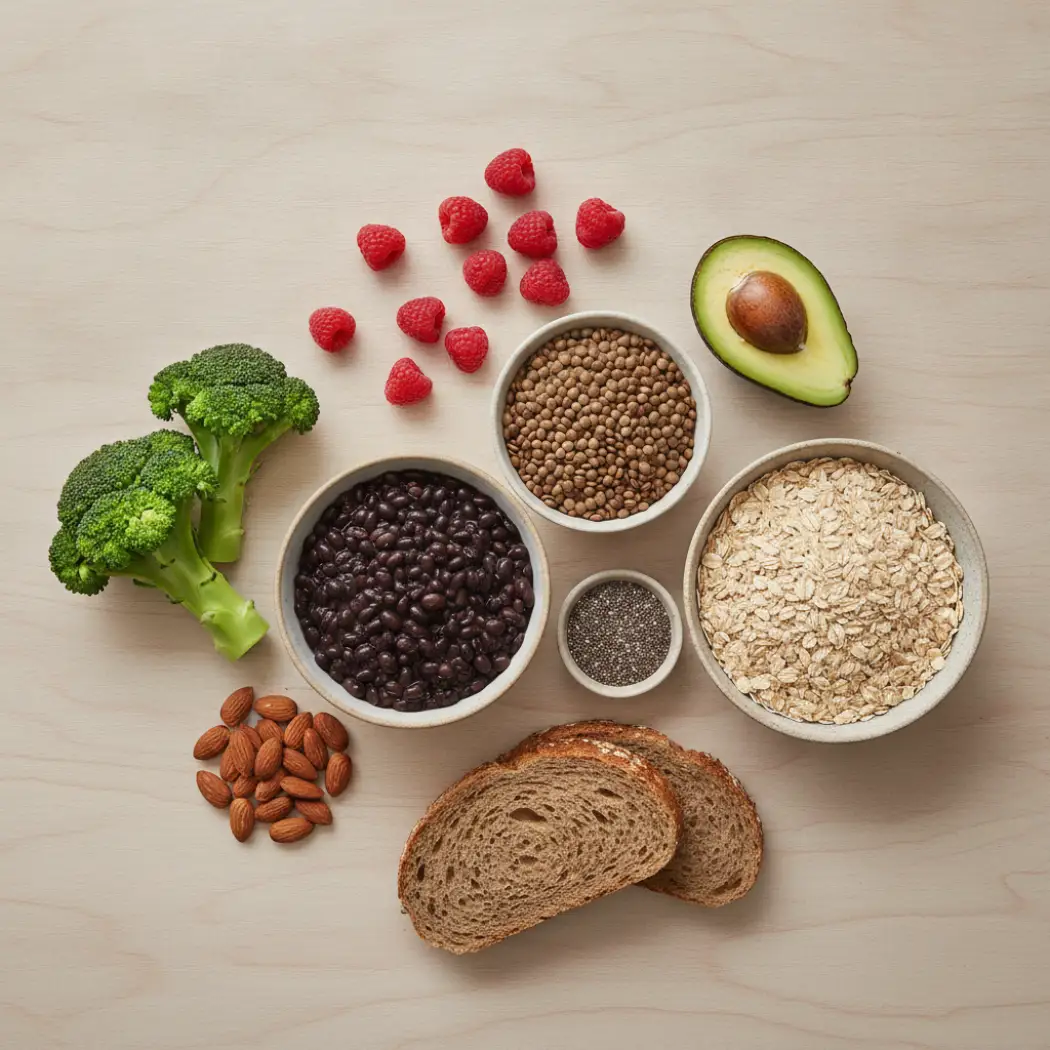
- 🌾 Generic psyllium husk: ~6 g fiber per cheap scoop — about $0.03–0.05 per gram.
- 🫐 Chia seeds: ~5 g fiber per tablespoon — about $0.04–0.06 per gram.
- 🫘 Canned beans: ~15 g fiber per can — about $0.07 per gram.
💰 The reality check: to add 25 g of fiber a day for 60 days (1,500 g total), you'd pay roughly $495 via BelliWelli, ~$60 via generic psyllium, or ~$75 via chia — the bundle is 6–10× more expensive per gram of fiber. So what are you actually paying the premium for? Taste, gentleness (no inulin), convenient formats, and the brand. Those are real reasons for some people — but if your goal is simply "more fiber," this is a very expensive way to get it.
Does the BelliWelli Fibermaxxing Bundle help with bloating and regularity?
For gentle, everyday digestive support, this is where BelliWelli earns its keep — with realistic expectations.
✅ Because it uses acacia and tapioca fiber with no inulin, it's genuinely one of the more low-bloat, stomach-friendly fiber options — many reviewers with sensitive guts say they feel less bloated and more regular on it, which isn't always true of gassier inulin-based products.
🗓️ What to realistically expect, week by week:
- Week 1: ease in with one serving a day. Even gentle fiber can cause temporary gas or bloating if you jump in too fast — and drink plenty of water, or fiber can backfire into constipation.
- Weeks 2–3: most people notice the wins here — more regular, comfortable bathroom trips and less bloating, as your gut adapts to the added fiber.
- Weeks 4+: benefits are maintenance-level and depend on total daily fiber (food + supplement). If you felt nothing, you're likely not getting enough total fiber — the bundle alone won't do it.
⚠️ Key safety note: the whole point of fibermaxxing done right is to increase fiber gradually over 1–2 weeks and hydrate. Going from 15 g to a sudden high intake — even with gentle fiber — is what causes the bloating and gas people fear.
Is the BelliWelli Fibermaxxing Bundle good for GLP-1 users?
This is a genuine, timely use case BelliWelli markets to — and it's fair, with caveats. People on GLP-1 medications (Ozempic, Wegovy, Zepbound) very commonly struggle with constipation, and adequate fiber plus water is a legitimate, doctor-recommended way to help.
✅ A gentle, tasty fiber like BelliWelli's can be an easy way to add some fiber when your appetite is suppressed and you're eating less — the pleasant formats help you actually take it.
⚠️ But be clear on two things: the bundle does not boost the GLP-1 medication or aid weight loss beyond fiber's normal satiety effect, and at 4–5 g per serving it's still a top-up. If your main issue is GLP-1 constipation, cheap psyllium works at least as well for pennies. If you specifically want a broader GLP-1 nutrition companion (protein, electrolytes, etc.), that's a different product like the Replenza Daily Replenisher. Buy BelliWelli for the gentle fiber and format, not for a GLP-1 miracle.
How does the BelliWelli Fibermaxxing Bundle compare to Supergut and psyllium?
Here's how BelliWelli stacks up against the options US fiber-shoppers actually cross-shop — on fiber per serving, type and, crucially, cost per gram.
| Option | Fiber / serving | Cost per gram of fiber | Strength | Weakness |
|---|---|---|---|---|
| BelliWelli bundle | 4–5 g (acacia/tapioca) | ~$0.30–0.33 | Tasty, gentle, no inulin, fun formats | Priciest per gram; low dose; token extras |
| Supergut GLP-1 | 6–7 g (resistant starch) | ~$0.28–0.33 | Clinically studied resistant starch; higher dose | Also premium-priced; subscription-first |
| Metamucil (psyllium) | ~3 g (psyllium) | ~$0.05–0.07 | Best-evidenced fiber; cheap; proven for cholesterol | Gritty texture; can be gassy for some |
| Generic psyllium / chia | 5–6 g | ~$0.03–0.06 | Cheapest by far; whole-food (chia adds omega-3) | No flavor/format frills; DIY |
So which should you choose? For the cheapest, best-evidenced fiber, psyllium or chia win outright. For a higher, clinically-studied dose in a supplement, Supergut. BelliWelli's genuine edge is being the most pleasant and gentle — tasty formats, no inulin, low-bloat — which is worth real money to people who otherwise won't take fiber. It's the "you'll actually enjoy it" pick, not the value or dose pick.
BelliWelli Fibermaxxing Bundle vs the Core Four Bundle — which should you buy?
BelliWelli sells two bundles, and it's worth knowing the difference before you pick.
- 🎁 Fibermaxxing Starter Bundle ($114.99, 80 servings): three different formats — sticks, gummies and a powder tub. It's the variety / "try everything" kit, ideal if you don't yet know whether you prefer gummies, drink mixes or powder.
- 📦 Core Four Bundle ($89.99, 106 servings): four tubs of the same daily fiber powder in four flavors. It's the value / stock-up kit — more servings, lower price, if you already like the powder.
➡️ Bottom line: buy the Fibermaxxing bundle to sample all three formats; buy the Core Four to stock up cheaply once you know you like the powder. The Core Four is the better per-serving value; the Fibermaxxing kit is the better introduction. If you already know you want just one format, skip both bundles and buy that single product.
Who makes BelliWelli, and is the Fibermaxxing Bundle legit?
Yes, it's legit. BelliWelli is a real, established US gut-health brand founded by Katie Wilson — it started with gut-friendly snack bars for people with IBS and sensitive stomachs, and has grown into fiber products sold nationwide at Target and other major retailers. It's a genuine, dietitian-discussed brand with a real mission, not a fly-by-night operation.
⚠️ One honest note on the reviews: the glowing 4.66/5 (330+ reviews) you'll see is BelliWelli's on-site rating, which isn't independently verified. Third-party feedback (e.g. Walmart) is more mixed — plenty of "works great, tastes amazing," but also "did nothing for me," "expensive," and "too sweet." So it's a credible, well-liked brand — just weight the first-party rating accordingly, and know a minority don't find it worth the price.
Are there downsides to the BelliWelli Fibermaxxing Bundle?
Beyond the price and low dose already covered, a few practical things to know:
- ⚠️ Cost and burn-rate: the powder tub is only ~30 servings (about a month at one scoop a day), so at a real fiber intake it goes quickly — this is an ongoing ~$40+/month habit, not a one-time fix.
- ⚠️ Added sugar: 2 g per serving is low, but it's still there — and some reviewers find the flavors "sickly sweet."
- ⚠️ Texture: the powder can get clumpy if you stir rather than shake it — use a shaker or bottle.
- ⚠️ Ramp slowly + hydrate: as with any fiber, increase gradually and drink water to avoid gas, bloating or constipation. If you have IBS, IBD or diverticulitis, check with your doctor.
- ⚠️ Not a whole-food replacement: it's a top-up. Real produce, beans, oats and chia deliver fiber plus nutrients a supplement can't.
My verdict on the BelliWelli Fibermaxxing Bundle — should you buy it?
Is the BelliWelli Fibermaxxing Bundle worth it? My verdict is: yes for the taste-and-gentleness crowd, no for value — 6/10.
To be fair, BelliWelli does the hard part well: it makes fiber that's genuinely pleasant and gentle to take. The no-inulin acacia/tapioca formula is low-bloat and low-FODMAP-friendly, the three formats are fun, the brand is legit and Target-stocked, and for someone who won't choke down psyllium or eat beans, "the fiber you'll actually take" has real value.
But as a way to "fibermaxx," it's oversold and overpriced: each serving is only 4–5 g, the whole $115 bundle averages ~6 g/day, the probiotic and collagen are token, and you're paying 6–10× more per gram of fiber than psyllium or chia. The trend is real; the premium isn't necessary.
- 👍 Buy the BelliWelli Fibermaxxing Bundle if you have a sensitive/IBS gut, you hate gritty or gassy fiber, you want tasty formats you'll actually use daily, and the price doesn't bother you.
- 👎 Skip it if you mainly want to hit your fiber target affordably (buy psyllium, chia or beans and eat more produce), you want the strongest cholesterol/blood-sugar evidence (psyllium), or you're buying for the probiotic/collagen (token doses).
➡️ Bottom line: a lovely, gentle, well-branded fiber kit that's a genuinely nice way to top up — wrapped in trend marketing and a steep per-gram price. If enjoyment is what gets you to take fiber, it's worth it to you; if you just want the fiber, the best fibermaxxing tool is still a bowl of beans and a spoon of chia.
Pair it with fiber-rich food — and ramp up slowly with plenty of water.
BelliWelli Fibermaxxing Bundle FAQ
What is the BelliWelli Fibermaxxing Bundle?
It's a three-product fiber kit (20 stick packs, a jar of fiber gummies, and a daily fiber tub — 80 servings) built around the "fibermaxxing" trend. Each serving provides 4–5 g of gentle acacia/tapioca fiber plus a probiotic, collagen and electrolytes. It costs $114.99 (about $103 on subscription).
Does the BelliWelli Fibermaxxing Bundle actually give you enough fiber?
Not on its own. Each serving is only 4–5 g — about a sixth of the 25–38 g daily target — and the whole bundle averages ~6 g/day. It's a top-up to help close your fiber gap, but you'll still need fiber-rich food to reach your target.
Is the BelliWelli Fibermaxxing Bundle worth the price?
It depends on what you value. At ~$0.30 per gram of fiber it's 6–10× more expensive than psyllium, chia or beans, so it's poor value if you just want fiber. It's worth it if you specifically want gentle, tasty, low-bloat fiber in formats you'll actually take daily.
Will the BelliWelli Fibermaxxing Bundle make me bloated?
Less than many fiber products, because it uses acacia and tapioca fiber with no inulin (the common gas culprit). But any fiber can cause temporary gas or bloating if you ramp up too fast — increase gradually over 1–2 weeks and drink plenty of water.
Is the BelliWelli Fibermaxxing Bundle good for Ozempic or GLP-1 users?
It can help with GLP-1-related constipation, since fiber plus water eases that side effect, and the gentle formats are easy to take when your appetite is low. It won't boost the medication or cause weight loss beyond fiber's normal satiety, though — and cheap psyllium does the constipation job for far less.
BelliWelli Fibermaxxing Bundle vs Core Four Bundle — which is better?
The Fibermaxxing bundle gives you three different formats (sticks, gummies, powder) to sample — best if you're new to BelliWelli. The Core Four bundle is four tubs of the same powder in four flavors, with more servings for less money — better value once you know you like the powder.
Can I just fibermaxx with food instead?
Yes — and it's cheaper and more nutritious. Beans, chia, oats, lentils, berries and vegetables deliver fiber plus vitamins, minerals and resistant starch that supplements can't. A supplement like BelliWelli is a convenient top-up, not a replacement for fiber-rich food.
Keep reading before you buy the BelliWelli Fibermaxxing Bundle
A little comparison helps before committing to a premium fiber bundle:
- BelliWelli Core Four Bundle review — the brand's value stock-up bundle (four flavors of one powder) if you already like the format.
- Benefiber review — a basic, cheap prebiotic fiber if you want the effect without the premium.
- ZOE Daily30+ review — a whole-food, plant-diversity approach to fiber and gut health.
- Replenza Daily Replenisher review — a broader GLP-1 nutrition companion if that's your main goal.
Disclaimer: This BelliWelli Fibermaxxing Bundle review is independent editorial information, not medical advice. Dietary supplements are not intended to diagnose, treat, cure or prevent any disease; individual results vary. Fiber supplements are a top-up, not a replacement for a fiber-rich diet, and "more fiber" is not always better — increase fiber gradually with adequate water to avoid gas, bloating or constipation. If you have IBS, IBD, diverticulitis, or are on a GLP-1 or other medication, talk to a licensed healthcare professional before making big changes to your fiber intake. This page may contain affiliate links; we may earn a commission at no extra cost to you, which never changes our honest assessment. Pricing was accurate at the time of writing (July 2026) and may change — verify on the official site.