BodyHealth Digestive Enzymes Review 2026 - Worth It? is presented for general information by MexicanPharm24. This is not medical advice and we do not sell or ship medications. Read the label and consult a licensed healthcare professional before use.
 Stomach Acid
BodyHealth Digestive Enzymes Review: Does It Work?
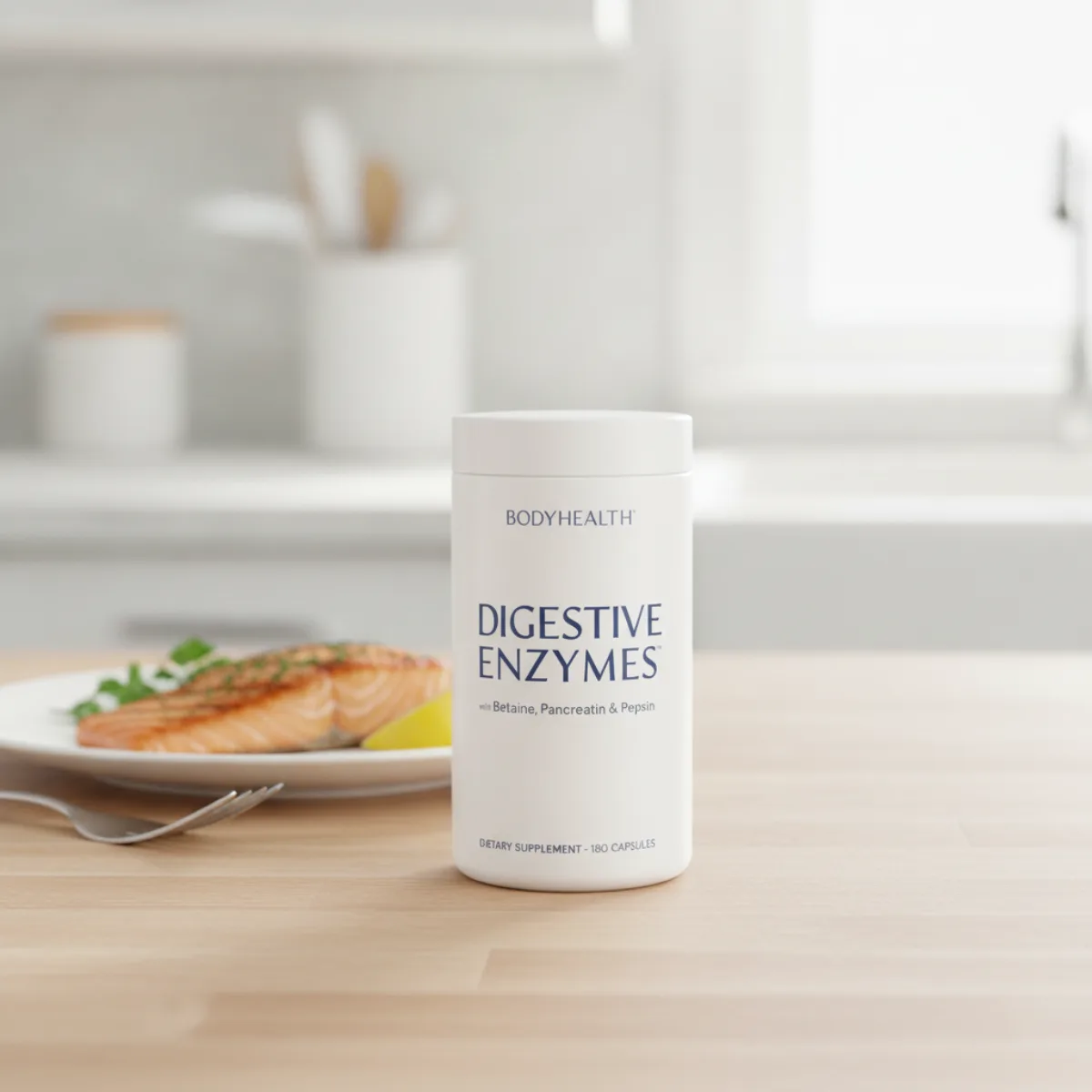
An honest BodyHealth Digestive Enzymes review: the Betaine HCl + pancreatin formula, who it's for, the safety caveats, the price, and how it compares to NOW and Enzymedica.
Reviewed July 1, 2026
Is BodyHealth Digestive Enzymes worth it? My honest review at a glance
BodyHealth Digestive Enzymes isn't a generic enzyme blend — it's built around a big dose of Betaine HCl plus pepsin and pancreatin, aimed squarely at people who suspect low stomach acid or struggle to digest protein and fat. The formula is transparently dosed, which I like. But it's a specific tool for a specific problem, it's not vegan, and the Betaine HCl brings a real safety caveat. Let's figure out if it's right for you.
I went through the formula, what it's actually for, the safety issues, the brand, and the real feedback. Here's my honest take.
BodyHealth Digestive Enzymes is a fully-disclosed Betaine HCl (1,400mg) + porcine pepsin + pancreatin formula for people with suspected low stomach acid or trouble digesting protein and fat. The honest catches: it's not vegan (porcine actives), it lacks lactase/fiber enzymes (so it's not for lactose or plant-fiber issues), the Betaine HCl is unsafe with ulcers/gastritis/acid-reducers, it's pricier than mass-market enzymes, and its founder is a polarizing figure. Great for its niche, wrong for many others.
The essentials of my BodyHealth Digestive Enzymes review
My rating: 7/10 — a transparent, well-targeted low-stomach-acid enzyme formula that's simply not for everyone.
Key spec: Betaine HCl + pepsin + pancreatin, 1–2 capsules with protein meals.
| Detail | BodyHealth Digestive Enzymes |
|---|---|
| Brand | BodyHealth (Clearwater, FL; founder Dr. David Minkoff) |
| Format | Veg-cap shell, 1–2 with meals, 180 caps (90 servings) |
| Type | Betaine HCl + porcine pepsin + pancreatin (not vegan) |
| Per 2 caps | Betaine HCl 1,400mg, pepsin 40mg, pancreatin 8X 200mg (amylase/protease 20,000 USP, lipase 1,600 USP) |
| Price | $37.50 (180 caps, ~3-month supply) |
| Diet | Gluten/dairy/soy-free; porcine actives |
✅ What I liked
- ✅ Fully disclosed doses — no proprietary blend.
- ✅ A genuinely targeted formula for low stomach acid and protein/fat digestion (Betaine HCl + pepsin + pancreatin).
- ✅ Big 180-capsule bottle (~3 months) and a 100% satisfaction guarantee.
- ✅ From an established 20+ year US brand with real manufacturing credentials.
❌ What held it back
- ❌ Not vegan (porcine pepsin and pancreatin), and lacks lactase/cellulase, so it's not for lactose or fiber issues.
- ❌ The 1,400mg Betaine HCl is unsafe for anyone with ulcers, gastritis, or on acid-reducers/NSAIDs.
- ❌ Pricier than mass-market enzymes; the "probiotics" claim isn't on the label; the founder is controversial.
🎁 Backed by a 100% satisfaction guarantee.
In this BodyHealth Digestive Enzymes review:
- What's inside
- What is it actually for?
- Is it vegan?
- Does it actually work?
- Is it safe with the Betaine HCl?
- Who makes it
- Is it worth the price?
- How it compares
- What customers say
- My verdict
- FAQ
What's inside BodyHealth Digestive Enzymes?
To its credit, the formula is fully disclosed (no proprietary blend). Per 2-capsule serving:
- 🧪 Betaine HCl — 1,400mg: supplemental stomach acid, the centerpiece of the formula (for people with low stomach acid).
- 🥩 Pepsin — 40mg (porcine): the stomach's protein-digesting enzyme, which works in an acidic environment.
- ⚙️ Pancreatin 8X — 200mg (porcine): delivering amylase 20,000 USP, protease 20,000 USP and lipase 1,600 USP for carbs, protein and fat, plus a little L-leucine.
💡 That's a coherent "stomach-acid-plus-pancreatic-enzyme" design. ⚠️ Two honest flags: it does not contain lactase, cellulase, bromelain or DPP-IV, so it won't specifically help lactose, plant fiber or gluten; and although an Amazon listing mentions "probiotics," there are no probiotic strains on the actual label — treat that as marketing overreach.
What is BodyHealth Digestive Enzymes actually for?
This matters, because it's a targeted product, not an all-purpose one. It's designed for people who suspect low stomach acid (hypochlorhydria) or have trouble digesting protein and fat — think heaviness, bloating or reflux after protein-rich meals, especially in people over 40 (stomach acid tends to decline with age).
💡 The Betaine HCl restores acidity, pepsin and protease break down protein, and lipase handles fat — which is why reviewers specifically mention it helping them digest meat. ⚠️ But if your issue is lactose (you need lactase), gas from beans/fiber (alpha-galactosidase/cellulase), or gluten, this isn't the right formula — it doesn't contain those enzymes.
Is BodyHealth Digestive Enzymes vegan?
No — and this is a common point of confusion, so I'll be clear. Despite BodyHealth's plant-based marketing on other products (like PerfectAmino), this one is not vegan or plant-based: both the pepsin and the pancreatin are porcine (pig-derived). The capsule shell itself is vegetarian (hypromellose), but the active enzymes are animal-sourced.
⚠️ So it's not suitable for vegans, vegetarians who avoid animal enzymes, or anyone avoiding pork for religious reasons (it isn't marketed as kosher or halal). If you need a plant-based enzyme, Enzymedica Digest Gold or Pure Encapsulations Digestive Enzymes Ultra are the vegan picks instead.
Does BodyHealth Digestive Enzymes actually work?
For its intended job — supporting protein/fat digestion when stomach acid or enzyme output is low — the mechanism is sound, and many users report real relief.
How to use BodyHealth Digestive Enzymes
- Take 1–2 capsules with (protein-rich) meals — not on an empty stomach.
- Start low (one capsule) to gauge how the Betaine HCl feels, and don't exceed the label.
➡️ The honest read: the evidence for OTC digestive enzymes is modest and supportive (strongest for pancreatic enzymes in people with genuine insufficiency), and Betaine HCl for low stomach acid is plausible but under-studied. Plenty of users get less post-meal heaviness and better protein digestion, but treat this as a general-wellness support — not a proven treatment.
Is BodyHealth Digestive Enzymes safe with the Betaine HCl?
This is the most important safety point. That 1,400mg of Betaine HCl is supplemental hydrochloric acid, and it is not for everyone. Some people feel warmth or a burning sensation, which is a signal to reduce or stop.
🚨 Do NOT take BodyHealth Digestive Enzymes if you:
- Have (or suspect) ulcers, gastritis, or an inflamed/irritated stomach lining — added acid can worsen it.
- Take acid-reducing medication (PPIs, H2 blockers) or NSAIDs (ibuprofen, aspirin), or corticosteroids.
- Have exocrine pancreatic insufficiency (EPI) — that needs prescription pancreatic enzymes and a doctor.
- Are pregnant or breastfeeding.
Supplements aren't FDA-approved and don't treat any condition. Reflux and indigestion can have serious causes — if symptoms persist, get evaluated rather than self-treating with acid.
Who makes BodyHealth Digestive Enzymes?
BodyHealth is an established (20+ year) US supplement company based in Clearwater, Florida, an outgrowth of an integrative wellness clinic; its flagship is PerfectAmino. It has real manufacturing credentials — PerfectAmino, for instance, is NSF Certified for Sport (note: that certification is for that product, not this enzyme SKU).
⚠️ In the interest of honesty: the founder, Dr. David Minkoff, MD, is a polarizing figure — a conventionally-trained physician turned integrative practitioner whose public profile includes documented controversy (regulatory history and a well-known association). None of that makes the product unsafe, but it's fair context for anyone weighing the brand.
Is BodyHealth Digestive Enzymes worth the price?
At $37.50 for 180 capsules (a ~3-month supply at 2/day), the per-day cost is actually reasonable given the bottle size — but it's still pricier than mass-market enzymes like NOW Super Enzymes (~$22–27).
💰 My take on the value: the transparent dosing, the specific low-stomach-acid design, the big bottle and the satisfaction guarantee make it fair value for the right person. But NOW Super Enzymes offers a similar Betaine HCl + pancreatin approach (plus ox bile) for less — so unless you specifically want BodyHealth's clean, disclosed formula, the cheaper option covers similar ground.
How does BodyHealth Digestive Enzymes compare to NOW, Enzymedica and Pure Encapsulations?
Here's how it stacks up against three digestive-enzyme products US shoppers cross-shop.
| Product | Price | Key actives | Strength | Weakness |
|---|---|---|---|---|
| BodyHealth Digestive Enzymes | $37.50 / 180 | Betaine HCl 1,400mg + porcine pepsin + pancreatin | Transparent, targets low stomach acid/protein | Not vegan; no lactase/fiber enzymes; HCl caveats |
| NOW Super Enzymes | ~$22–27 / 180 | Pancreatin + Betaine HCl + ox bile + bromelain | Great value; similar approach + bile for fat | Not vegan (gelatin/animal); contains sulfites |
| Enzymedica Digest Gold | ~$40–50 / 90 | Vegan Thera-blend + lactase, high potency | Vegan, broad, includes lactose coverage | No Betaine HCl for low stomach acid; pricey/cap |
| Pure Encapsulations Enzymes Ultra | ~$68–75 / 180 | Vegan 13-enzyme spectrum (lactase, cellulase…) | Most comprehensive, hypoallergenic | Most expensive; no HCl/pepsin |
So which should you choose? For suspected low stomach acid / protein digestion, BodyHealth (or cheaper NOW) is the pick because of the Betaine HCl. For a vegan broad-spectrum enzyme, Enzymedica Digest Gold; for the most comprehensive vegan spectrum (lactose + fiber), Pure Encapsulations. Match the formula to your actual digestion problem.
What do real customers say about BodyHealth Digestive Enzymes?
Feedback is generally favorable, with clear themes (exact star counts couldn't be independently confirmed, so treat aggregates cautiously):
👍 The positives: relief from post-meal heaviness, bloating and gas; specific help digesting animal protein and heavy meals; better regularity; and loyal repeat buyers who prefer it to cheaper options.
👎 The negatives: the price versus mass-market enzymes; and the Betaine HCl causing warmth or a burning feeling in some — a reminder it isn't for sensitive stomachs or those on acid-reducers.
So, should you buy BodyHealth Digestive Enzymes?
Is BodyHealth Digestive Enzymes worth it? My verdict is yes, for a specific person — 7/10.
To my mind, it's a well-made, fully-transparent formula that does one thing well: support protein and fat digestion in people with low stomach acid, via Betaine HCl, pepsin and pancreatin. The big bottle and satisfaction guarantee are pluses, and the disclosed doses beat proprietary blends.
What limits it is honest: it's not vegan (porcine), it lacks lactase/fiber enzymes, the Betaine HCl is genuinely risky for the wrong person, it's pricier than mass-market, the label doesn't back the "probiotics" claim, and the founder is controversial.
- 👍 Buy BodyHealth Digestive Enzymes if you suspect low stomach acid or struggle with protein/fatty meals, and you have no ulcer/gastritis or acid-reducer conflict.
- 👎 Skip it if you're vegan, your issue is lactose or fiber gas, you take acid-reducers/NSAIDs or have ulcers, or you want the cheapest option (NOW).
➡️ Bottom line: a transparent, targeted low-stomach-acid enzyme that's excellent for its niche — just make sure the niche (and the Betaine HCl safety profile) is actually yours before buying.
Take with protein meals; start with one capsule to gauge the Betaine HCl.
BodyHealth Digestive Enzymes FAQ
What is BodyHealth Digestive Enzymes for?
It's a targeted formula for people with suspected low stomach acid or trouble digesting protein and fat. It combines Betaine HCl, pepsin and pancreatin to restore acidity and break down protein, carbs and fat — helping with post-meal heaviness and bloating from protein-rich meals.
Is BodyHealth Digestive Enzymes vegan?
No. The pepsin and pancreatin are porcine (pig-derived), so it's not vegan, not for pork-avoidant diets, and not marketed as kosher or halal. Only the capsule shell is vegetarian. For a vegan enzyme, choose Enzymedica Digest Gold or Pure Encapsulations.
Is the Betaine HCl in BodyHealth Digestive Enzymes safe?
For most healthy adults at the labeled dose, but it's supplemental stomach acid, so it's not safe if you have ulcers, gastritis, or take acid-reducers (PPIs/H2 blockers) or NSAIDs. Some people feel warmth or burning — a sign to reduce or stop. Check with a doctor if unsure.
How do you take BodyHealth Digestive Enzymes?
Take 1–2 capsules with protein-rich meals (not on an empty stomach). Start with one capsule to see how the Betaine HCl feels, and don't exceed the label. A 180-capsule bottle lasts about 3 months at 2/day.
Does BodyHealth Digestive Enzymes contain probiotics?
No — despite an Amazon listing mentioning "probiotics," the actual supplement facts list no probiotic strains. It's a Betaine HCl + pepsin + pancreatin enzyme formula only.
How much does BodyHealth Digestive Enzymes cost?
$37.50 for a 180-capsule bottle (about a 3-month supply), with multi-bottle discounts and a satisfaction guarantee. It's pricier than mass-market enzymes like NOW Super Enzymes but offers fully disclosed doses.
Does BodyHealth Digestive Enzymes help with lactose or gas from beans?
Not specifically — it doesn't contain lactase (for lactose) or alpha-galactosidase/cellulase (for beans and fiber). It's built for protein/fat digestion and low stomach acid. For lactose or fiber gas, choose an enzyme that lists those specific enzymes.
Keep reading before you buy BodyHealth Digestive Enzymes
A little homework helps you use a stomach-acid product wisely:
- How to read a supplement and medication label — so enzyme units and the Betaine HCl dose make sense.
- How to buy medications and supplements online safely — a checklist for buying from trustworthy sellers.
Disclaimer: This BodyHealth Digestive Enzymes review is independent editorial information, not medical advice. This product contains supplemental hydrochloric acid (Betaine HCl) and is not suitable for anyone with ulcers, gastritis, or taking acid-reducing medication or NSAIDs. Dietary supplements are not intended to diagnose, treat, cure or prevent any disease, and individual results vary; it is not a substitute for prescription pancreatic enzymes. Talk to a licensed healthcare professional before starting any new supplement, especially if you have a digestive condition, take medication, or are pregnant. This page may contain affiliate links; we may earn a commission at no extra cost to you, which never changes our honest assessment. Pricing was accurate at the time of writing (July 2026) and may change — verify on the official site.